
Laughing gas (nitrous oxide) is one of the safest forms of dental sedation and most people have no side effects. When side effects do happen, the most common are nausea, headache, dizziness, sweating, shivering, and tiredness. They usually appear before you leave the office and fade within minutes once the gas is turned off and you breathe pure oxygen. Long-term side effects from supervised dental use are not expected.
At Confident Smiles & Implants, we offer laughing gas to help anxious patients relax during treatment. Here is what to expect, based on guidance from the Cleveland Clinic and the American Academy of Pediatric Dentistry.
What does laughing gas do?
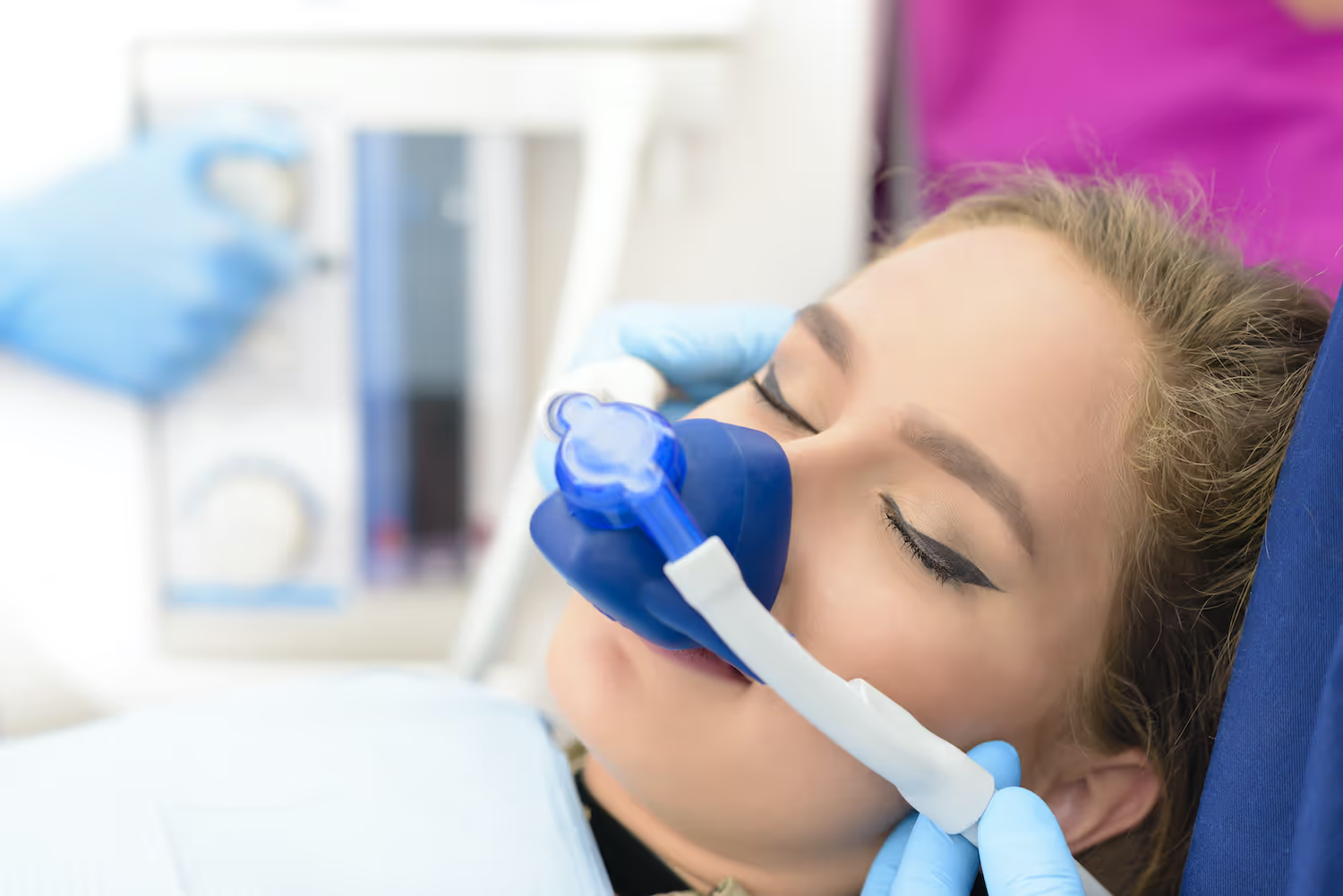
To administer laughing gas, you breathe nitrous oxide mixed with oxygen through a small mask over your nose. Within a few minutes, most people feel calm, relaxed, and a little lightheaded. You stay awake, can answer questions, and keep your normal reflexes.
In a study of 101 volunteers, nearly all reported tingling and a sense of relaxation at standard dental doses (Journal of Clinical and Experimental Dentistry). Despite the nickname, not everyone laughs.
Common short term side effects of laughing gas
Side effects of nitrous oxide are uncommon and usually linked to breathing in too much gas or breathing it in too quickly. They can include:
- Headaches
- Nausea
- Dizziness
- Vomiting
- Sweating
- Shivering
- Fatigue
These instances are rare, but if they happen to you, your dentist will quickly give you oxygen to counter the effects of the nitrous oxide. This will help you become more alert, and clear the laughing gas from your body. The Cleveland Clinic notes that these effects go away once the gas leaves your system, and they can also be treated with anti-nausea or pain medicine.
Can You Have an Allergic Reaction to Laughing Gas?
If you’ve never had laughing gas before, you are likely wondering about the potential risk of an allergic reaction. It is possible to be allergic to this gas, and common symptoms of it will include:
- Fever
- Problems with breathing
- Chills
- Hives
If you experience any of these symptoms, you should seek medical assistance right away.
Regarding any potential long-term side effects for nitrous oxide, there is not a lot of evidence to indicate this risk. Most symptoms wear off after the gas leaves your system.
How long do laughing gas side effects last?
The calming effect lasts only while the gas is flowing. Once it's turned off, most people feel normal again within a few minutes of breathing oxygen. Any side effects usually show up before you leave the appointment, not hours later.
Can laughing gas cause side effects the next day?
It's unlikely. Because nitrous oxide clears quickly, next-day symptoms are not typical. If a headache, nausea, or dizziness continues for hours or returns the next day, call your dentist so we can check whether something else is going on, such as a reaction to another medication.
Can I drive after laughing gas?
In most cases, yes. Unlike oral or IV sedation, most patients can drive themselves home after laughing gas once the gas is off and they've had a short recovery period on oxygen (Healthline). We'll confirm you feel fully alert before you leave.
Are there long-term side effects?
Not from normal dental use. The Cleveland Clinic states laughing gas doesn't cause long-term complications when given under a provider's care.
Who should avoid laughing gas?
The American Academy of Pediatric Dentistry and Dentalcare.com sedation training list these as reasons nitrous oxide may not be appropriate:
- Pregnancy
- Vitamin B12 deficiency
- Certain lung conditions, such as COPD or emphysema
- A recent ear, nose, or sinus infection or blockage
Also tell your dentist if you have a history of substance use or are under psychiatric care. Once the dentist helps you choose the right sedation, you will also be instructed on all the potential risks and benefits. You will be continuously monitored throughout the procedure to ensure your safety, and the dentist will have certain protocols to follow in case of an adverse reaction to sedation in order to reduce your side effects.
Frequently asked questions
Is laughing gas safe for children? Yes. The AAPD recognizes nitrous oxide with oxygen as a safe and effective way to reduce anxiety in children during dental care.
Can laughing gas cause diarrhea? Diarrhea is not among the commonly reported side effects. Nausea and, less often, vomiting are the stomach-related effects to know about.
Can you be allergic to laughing gas? A true allergy is not considered a common concern. If you have trouble breathing, hives, or swelling, tell your dentist right away or seek emergency care.
Should I eat before laughing gas? A light meal beforehand may help reduce the chance of nausea. Avoid a large, heavy meal right before your visit.
Book an Appointment at Confident Smiles & Implants
At Confident Smiles & Implants, we understand that certain dental procedures might give our patients a bit of anxiety, so we want to do everything we can to help them feel comfortable and safe. Laughing gas might be the solution they need, but it is far from the only one, and we always help our patients make an informed decision regarding their dental health.
Book a consultation with Dr. Luis or Dr. Tori Mariusso to get started.